I don’t play a lot of visual novels, and I certainly don’t make a lot of rotary dial phone calls, so a clickin’ and speakin’ game like Schrödinger’s Call is one I’d normally leave unheeded. That, however, would have been to my WhatsApp-brained detriment: this has the markings of a powerfully presented adventure, the demo for which kept me eagerly ringing up lost souls for a solid hour and a half.
Schrödinger’s Call follows Mary, an amnesiac girl pressed into work as a kind of hotline operator for distressed souls caught between life and death. And since the entire game takes place 21 nanoseconds before the Earth is mulched by a falling moon, there’s a lot of distressed souls caught between life and death, most of whom seem to have barely more reliable memories than Mary does. Through sketchbook and silver tongue, you gradually piece together your callers’ fragmented regrets and help them pass on.
As lead dev Seishi Irimajiri later puts it to me over a wobbly table at Gamescom Latam, Schrödinger’s Call is “about loneliness and connecting with people”, inspired by his experiences during Covid-19 lockdowns (notwithstanding the end of the world actually happening). This arguably makes it a distant cousin to Don’t Nod’s friendship-focused ARPG The Lonesome Guild: a fellow relationship builder that also gives the sense it was made with therapeutic intent for its creators as much as its players. But while The Lonesome Guild is an optimistic, borderline cuddly celebration of formed bonds, Schrödinger’s Call is more bittersweet, navigating the pain its relationships must endure to find that happiness on the other side.
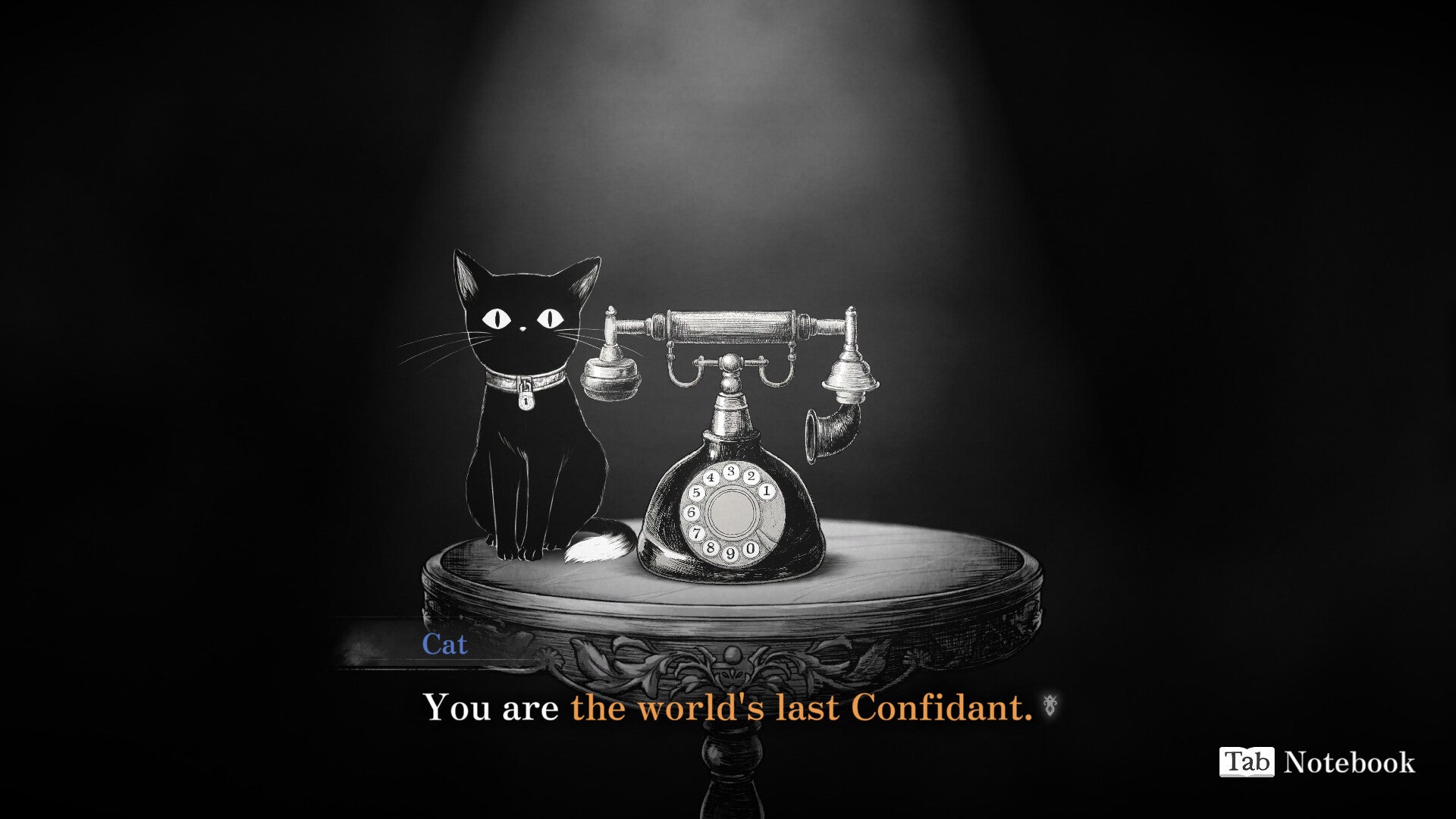
Again, I’m not one, but this is what I’m sure VN fans could call “good shit”. Mary’s first nanosecond on the job has her handling the tragic schism of a mother-and-son pairing – an impressively impactful tale that swells from tentative chats with both parties to a dramatic, almost boss fight-ish verbal showdown where you need to talk down a rapidly spiralling mum. It’s dynamically structured but sensitively written, never rushing its reveals and wisely valuing the layers of hopes, fears, and loves that each call builds up over one-note apocalypse horror.
This picking-apart of anecdotes and memories, in which Mary’s thirst for understanding has her creeping across the line from caring listener to active participant, is further elevated by some fine presentational work. Much of this is visual trickery, beyond any conventional character art-plus-textbox format: dreamy VFX to heighten the oddness of this mid-cataclysm call centre gig, or jarring cuts between perspectives during tense moments. The whole thing is also drawn in a sketchy pencil style that’s somewhere between modern manga and 17th-century English picturebooks, with everyone who isn’t Mary given fairytale-style animal features.
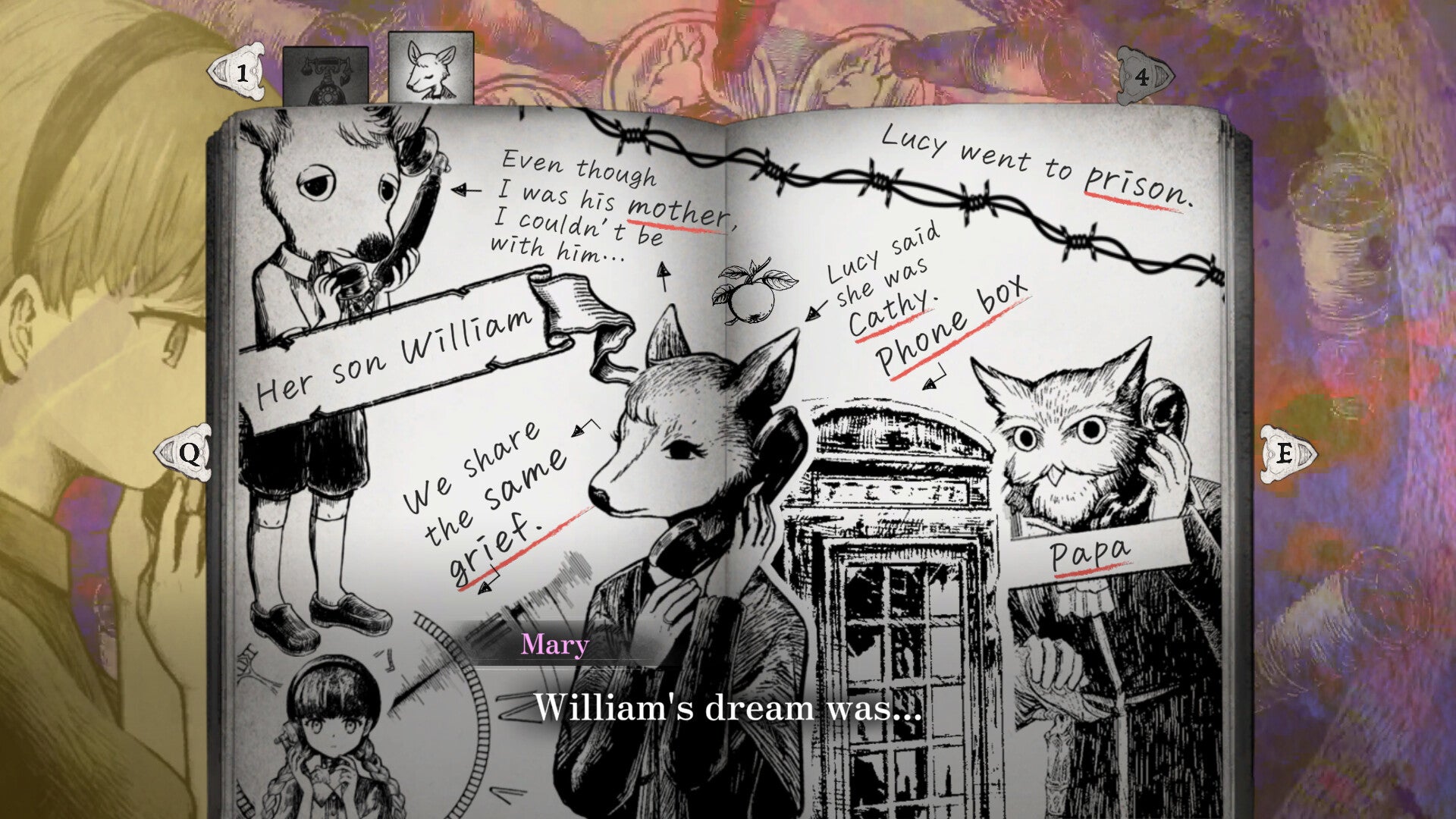
It’s odd, but mysteriously and ethereally so, rather than being weird for the sake of it. So too is the musical score, for the most part; this can be excellent, dragging key scenes to emotive peaks with soaring organs and synths while still providing uneasy texture to quieter moments. One character, however, is accompanied by an incongruously plodding tune that sounds like the game is trying to introduce a minor antagonist in a 1990s stop-motion series. For kids. Set in Bognor Regis.
Otherwise, mind, Schrödinger’s Call looks, sounds, and plays like it could be something special. It’s out on May 27th, and you can try the demo for yourself on Steam.


