Sci-fi dadblaster Pragmata is Capcom’s second smooth-running RE Engine game in two months, dishing out loads of ray-traced frames on muscular PCs while still running at a decent clip if you don’t quite meet all of its minimum system specs. But what happens when you dip even lower, down towards the realm of shared RAM and integrated graphics in which the Steam Deck resides? That’s mostly fine too. Probably didn’t need the dramatic buildup, did it.
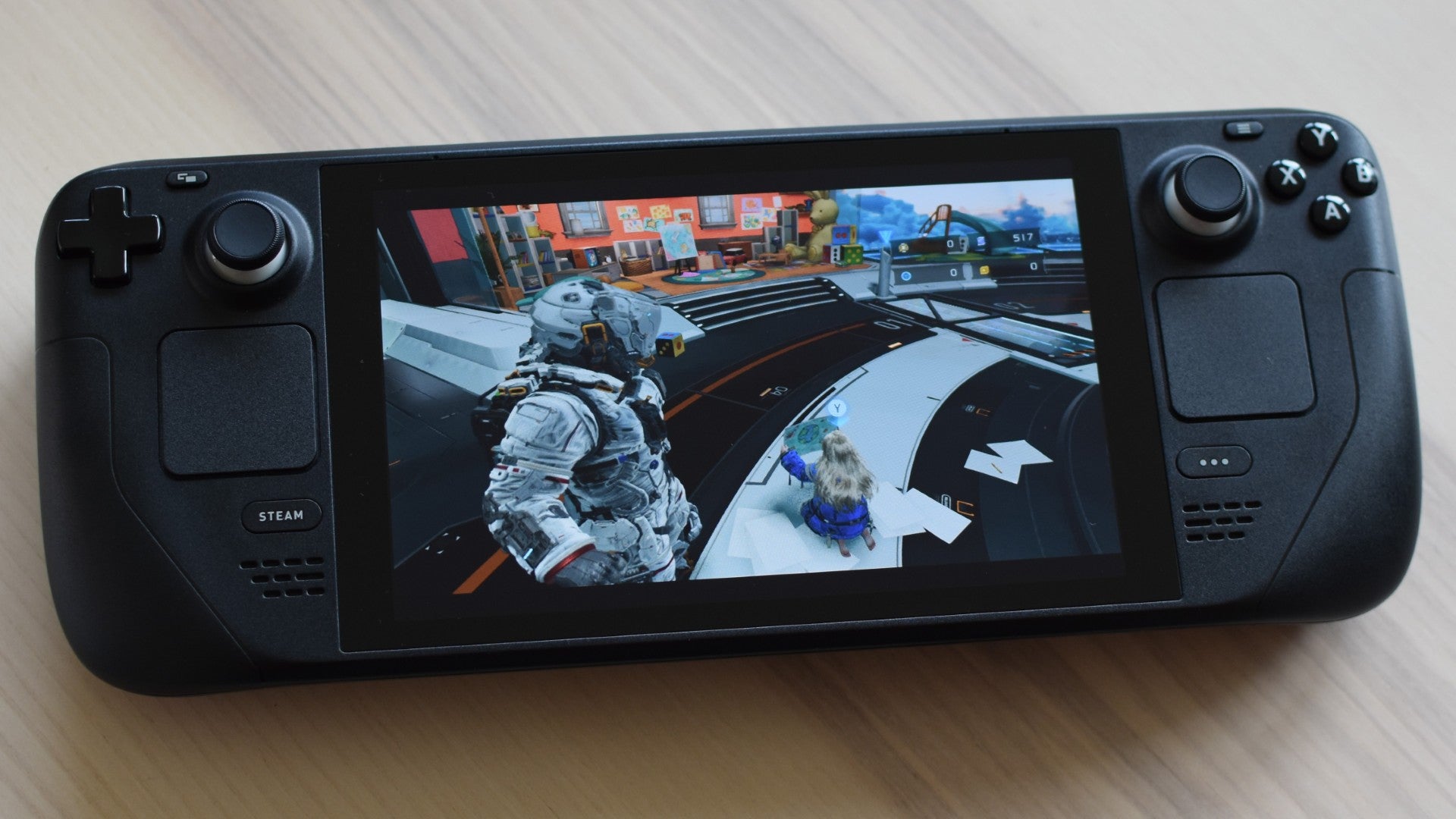
Much like its befringed cousin, Resident Evil Requiem, Pragmata’s slickness on desktop may not translate perfectly onto the much more frugal innards of Valve’s handheld PC; expect to spend more time around 30fps than 60, even with the custom settings I’ve worked out below. But it’s playable, without the need for any control tweaks or Proton compatibility wrangling, to the extent that it’s already won Steam Deck Verified status. Why, that’s like getting a firm, Dota 2-calloused thumbs up from Gabe himself, not to mention implicit confirmation that it’ll eventually play nice with the new Steam Machine as well.
Right now, though, I do bear some warnings. One is a bit of a nitpick, which could well end up being patched: the Deck-matching 1280×800 resolution setting doesn’t take, using the same proportions and horizontal black bars as the 1280×720 option. Mildly irritating at first, if broadly ignorable. The second, which may be more disappointing to anyone hoping for another Requiem-style masterclass in handheld performance, is that Pragmata does struggle more with its own toughest bits. Whacking on the lowest graphics preset, Minimum, still isn’t enough to entirely avoid sub-30fps drops when the screen gets busy with shining moonbase architecture and effect-bristling android baddies.
Those situations, luckily, are both the worst of the worst and relatively rare. It is in fact possible to turn up certain quality and FSR upscaling options from their Minimum levels while maintaining roughly the same level of performance, which to take a wider view, typically amounts to around 35fps in the difficult bits, 40-45fps in the majority of scenes, and as much as 60fps in the tighter corridors. Some occasional wobbles don’t undermine how, for a major, high-fidelity action game in 2026, that’s perfectly acceptable.

The default controls fit the Deck snugly, too. I don’t necessarily agree with Steam’s declaration, on startup, that gamepad-style controls are outright better – I find the tile-navigating hack manoeuvre much quicker and easier to pull off with mouse flicks – but Pragmata was undoubtedly developed with face buttons and shoulder triggers in mind, so it’s right at home ergonomically. And, despite cruelly robbing me of 80 more vertical pixels, it’s always been easily parsable to me on the original LCD Deck’s 7in screen. Even the slightly dinky button glyphs that pop up in menus and hacking windows aren’t hard to make out, provided you stick to FSR 3 upscaling (and not the sinful mushiness of FSR 1).
Battery usage does tend towards the harsh side, mind. With display brightness and speaker volume both at 50%, Pragmata slurped a fully charged LCD Steam Deck to empty in 1h 20m. That’s not the absolute fastest I’ve seen a game drain the original model, and you can expect at least a couple of hours on the more efficient Steam Deck OLED, though rendering all those 3D printed landscapes and yellow hair strands is evidently thirsty work.
Pragmata Steam Deck settings guide
The Steam Deck does benefit from Pragmata’s sprightly desktop performance, if indirectly – you don’t need to be a thermal paste-flecked hardware nerd to figure out that a game capable of big framerates on older and/or lower-end PCs would have a better chance on handheld-grade parts. Alas, even Pragmata’s tech triumphs can’t carry over in their entirety. Ray tracing, an exceptionally well-optimised lighting and reflections upgrade on most desktop GPUs, is off the table here, and a lot of the individual settings where quality level seemingly has no effect on a decent PC’s performance will, on the Deck, much more visibly eat your frames unless turned down. Or, in some cases, off.
All the same, settling for the Minimum preset is defeatist, and worse, uglier than necessary. A few settings, like texture quality, mesh quality, volumetric lighting, and effects quality, can all be tuned slightly upwards from their Minimum floor, all without worsening those already infrequent sub-30fps drops. FSR 3, too, can go up to Balanced mode; Performance sounds tempting, but from what I‘ve played, Balanced looks much less fuzzy while only costing 1-2fps in the difficult bits, if that.
Here’s what I’ve settled on, for playing on the LCD Steam Deck:
- V-Sync: Off
- Ray tracing: Off
- Path tracing: Off
- Global illumination quality: Low
- Upscaling: FSR 3 on Balanced
- Dynamic resolution: Off
- Frame generation: Off
- Hair quality: Low
- Texture quality: Low: 0.5GB
- Texture filtering: High (ANISO x2)
- Mesh quality: Medium
- Shadow quality: Low
- Shadow cache: On
- Contact shadows: Off
- Effects quality: Medium
- Video quality: Full HD
- Ambient occlusion: Off
- Volumetric lighting: Medium
- Bloom: Off
- Screen space reflections: Off
- Subsurface scattering: Off
- Motion blur: Off
- Lens flare: Off
- Lens distortion: Off
- Depth of field: Off
Because I’m an excellent writer, I prematurely described the specific performance of these settings about five paragraphs before listing them, so to recap: mostly 40-45fps, tilting towards 35fps-ish when Pragmata is at is at its most demanding, and potentially hitting 60fps at its least. More than enough, in other words – while the only scary thing about this game is how unprepared it makes me feel for fatherhood, its deliberate, almost careful shooting style has more in common with horror games than twitchy FPSseses, so it still feels comfortable with a frame count in the thirties.


