The following sparkling insights about boss battle design are from Marcin Matuszczyk, principal gameplay designer on Tomb Raider: Legacy of Atlantis, and a former developer of Outriders and Horizon Forbidden West. He was speaking to an audience of budding Bowser-builders and Sephiroth-sculptors during a presentation at Digital Dragons this year. That said, gamedev panels can make dry reading for lowly laypeople, so for dramatic purposes, I would like you to pretend that the below is voiced by Michael Caine’s character from The Prestige. Specifically, think of the scene where he describes what goes into a genuinely great magic trick.
The first part, or act, of any great boss fight is, of course, The Introduction. The game designer shows you the creature and the arena. There may be a cutscene or some dialogue. And then, your fumbling first attempts at evading or blocking the boss’s attacks, grasping at the sequences and triggers. The boss may appear to be just a larger, tougher version of an ordinary enemy, opening with some tactics you recognise from earlier in the level.
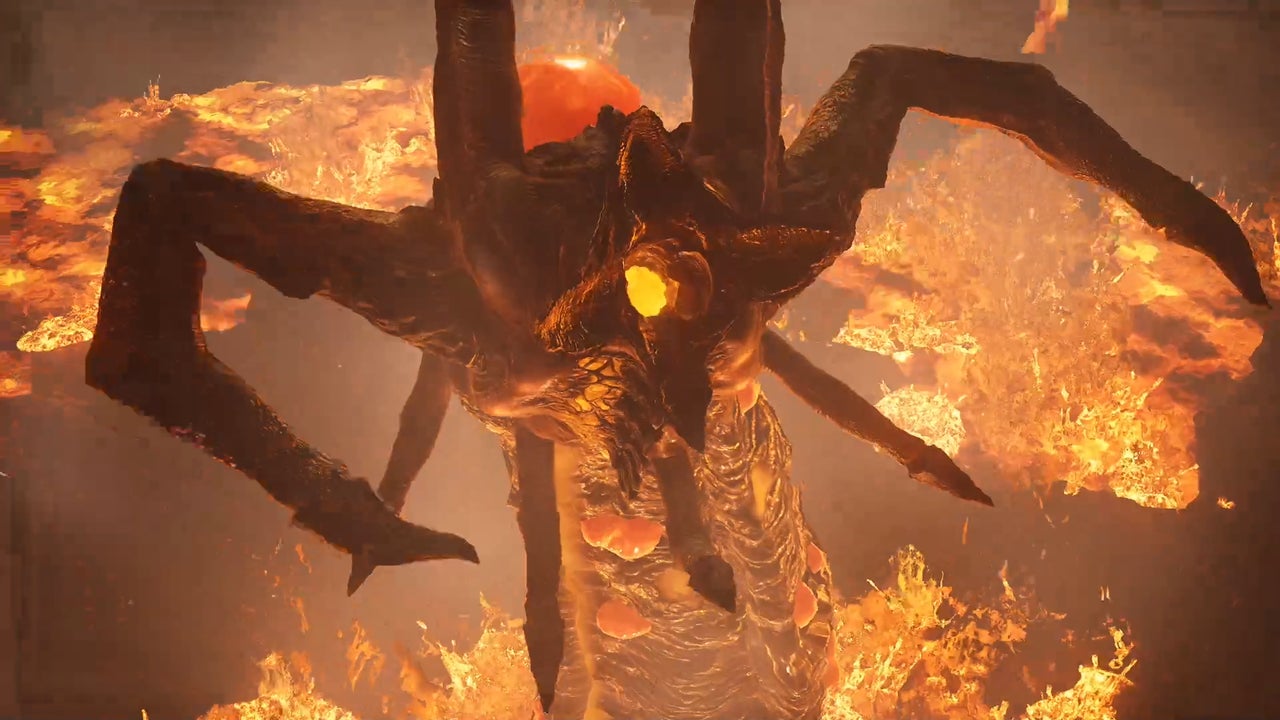
The second part is The Escalation. The game designer takes the ordinary enemy and makes it do something extraordinary. “You can add new moves, hazards, weapons, even change the area layout, to make the boss more challenging as the player progresses,” Matuszczyk suggested. Consider Genichiro from Sekiro, who strips off his armour and gains the ability to throw lightning, taunting the player to snatch it and toss it back. In general, the boss’s movements should befit the space of the fight, and help define it. The designer may give the boss smaller weakpoints to lure players in close, or add sweeping blows to force you to fight at a distance. Often it’s both, one after the other.
The Escalation may take the more deliberate form of The Midpoint Twist. “Think about how to surprise the player during the boss fight, to make it more memorable,” Matuszczyk said. “The boss can morph into a different creature, change location, or even change the rules of the combat.” Consider the Devil in Cuphead, who peels away his own skin in order to flee underground. Perhaps the game designer introduces a few minions to break the pace, like glamorous assistants strutting about the stage, while the magician hastily disposes of the crushed doves hidden in her tophat.
Within all this, there are The Tells. “Make your attacks clear with visual and audio cues,” Matuszczyk advised. “Ensure that losses come from the player’s mistakes, not from confusion. And keep the visuals clean, to avoid hiding the boss’s intentions.” These cues could include patches of ominous cracked ground, sonic waves, or laser dots ahead of a salvo. There’s also the option of non-diegetic elements – expanding red circles, flashing exclamation marks – though Matuszczyk dislikes ‘breaking the spell’ in this way. He’s keen to make bosses more “lifelike”, where possible – hence, taking heavy inspiration from animals when designing the bots for Horizon Forbidden West.
The Tells are integral to The Lesson, the ideas and techniques you want players to learn from the encounter. It could be learning how to shoot from horseback in Zelda while pursuing Ganondorf, or mastering the timing of pistol counters when going up against Father Gascoigne in Bloodborne. “Decide which player skills you want to challenge, and create attacks to test them, and tie these attacks to the boss theme,” Matuszczyk said.
The design of Tells becomes harder in multiplayer, when the game designer also has to worry about distributing and funnelling the boss’s attention: whether to concentrate on the closest player, for example, or on the player dealing the most damage within a certain duration. If you’re fighting alongside computer-controlled characters, they can form part of the act, part of the boss’s arsenal of pedagogic devices. Think of Atreus warning Kratos about incoming blows in God of War 2016.

The penultimate part is The Climax. “It’s the most intense phase, both mechanically and emotionally,” Matuszczyk said. The boss may launch into a berserker frenzy, unleashing everything they have with a reduced cooldown. You get to see every step of the dance, at murderous speed.
But you wouldn’t clap yet. The Climax spills over into The Resolution – the knitting-together of the narrative context, the resealing of the magic circle, once every last healthbar has been hacked away. Perhaps the boss is somebody you know – a family member driven by opposing ideals, as in Ghost of Tsushima. But even if they are just an oversized ordinary enemy with more HP and attacks, there should be some kind of farewell. They should do more than simply perish, because just making something disappear isn’t enough. You also have to… um. Er…
I’m going to end my wonky Prestige impersonation here, because Matuszczyk spent the rest of the panel talking about design documentation, and I can’t think of a way for Michael Caine to say “avoid changes of tense when itemising the moveset in English” that wouldn’t cause Michael Caine to storm off to his trailer in a huff. Assuming he didn’t already phone his agent about “non-diegetic”, above. Instead, I will conclude with some hopefully thought-inducing thoughts on what boss battles mean to me, the oaf who once sacrificed an entire night to the arthritic tiger in Alundra 2.
I’m not much enchanted by bosses, these days. Mostly it’s because bosses often feel like interviewing for a promotion I’m not sure I want. If every videogame is an exercise in learning the skills to complete it, then every “boss” is an examiner, presiding over a particular workfloor. To move up a floor, you have to demonstrate proficiency with everything the level had to teach you. Generally, you have to do it twice or thrice per battle, to show that doing it once wasn’t a fluke: during bossfights, the three-act structure can be more about discipline than drama.
But then I stumble on a really entertaining boss, like the delightful bait-and-switch at the end of the redesigned Chemical Plant Zone in Sonic Mania, an “Escalation” that winningly combines surprise with nostalgia. Ready availability to Hot Takes about the ‘jobbification’ of games notwithstanding, a boss is really just another bundle of expressive tools that can serve many purposes. And there’s something joyful about how this very antiquated concept has persisted, even as the more aspirational, realism-driven blockbuster action games strain to camouflage or naturalise their nerdier conventions.
Matuszczyk’s current gig Tomb Raider: Legacy of Atlantis could be one of the latter, though he told us little about it during the presentation. It seeks to combine the old Core Design game’s “spirit” with “modern” implementation and newly Unreal Engineered visuals, adding “depth” and “freshness”. This extends to cleaning up the old bossfights, including the conspicuously dejankified T-Rex who makes a brief appearance at the end of the announcement trailer. I do wonder if the ‘magic trick’ Matuszczyk and his fellow boss designers are gunning for is simply making you forget that you’re fighting a boss.
This article was based on a press trip to Digital Dragons 2026, with the event organisers paying for travel and accommodation.


