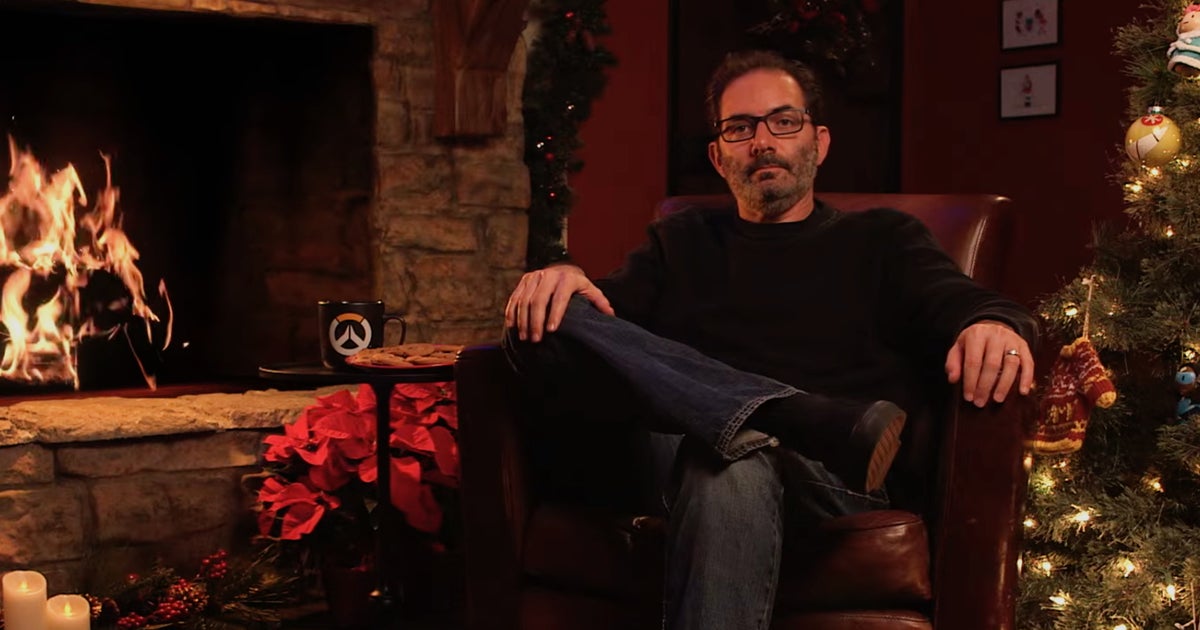
Former Overwatch director Jeff Kaplan has said his 2021 departure from Blizzard followed an ultimatum about redundancies which “ultimately broke” his resolve and led him towards the exit door. The developer frames that moment as the culmination of a number of tough years working on the hero shooter, which included a 2018 push into esports with the Overwatch League serving as a drain on resources for a team who were also trying to get Overwatch 2 off the ground.
“Where it got away from us is that there was a lot of excitement about Overwatch League, like too much and it got overmarketed to the people buying the teams,” Kaplan recalled in an interview with Lex Fridman. “They were pretty much selling the Brooklyn Bridge, that Overwatch League was going to be more popular than the NFL.” Cue “billionaire investors” and a broadcasting rights deal with Twitch that put the onus on Blizzard to deliver a bunch of in-game features and additions for the original Overwatch.
According to Kaplan, delivering the likes of Twitch integration, spectator camera controls, and a heap of Overwatch League team skins not only took up resources, but “huge technical challenges”. That left Blizzard’s developers stretched thin, with Kaplan explaining; “all of your plans at that point kind of go out the window. You’re not going to work on new world events. You’re not really even focused on Overwatch 2, you’re just kind of treading water.” “It was a great idea that the wrong instincts…I don’t know how to phrase this in a way that’s not damning, but there was too much focus on ‘let’s make lots of money really fast’, and a lot of people got dragged into it,” the developer summarised of the league, which folded in 2024.
During Kaplan’s last few years at Blizzard, though, it remained an albatross around the Overwatch team’s neck, with the overblown expectations for the league to make bank fueling pressure on the devs to increase the amount of cash Overwatch and its sequel could rake in. That fed into the director gradually losing the feeling of control over Overwatch’s direction back in 2016 and 2017, with Overwatch League and Overwatch 2 muddying the waters.
According to Kaplan, the straw that broke the camel’s back in terms of his tenure at Blizzard was a meeting with the company’s CFO which saw him issued an ultimatum. “He gives me a date, which at the time was 2020 and was going to slip to 2021, but at the time it was 2020,” the developer recalled. “He said ‘Overwatch has to make [a redacted amount of money due to Kaplan’s confidentiality agreement with Blizzard] in 2020 and then every year after that it needs a recurring revenue of [a redacted amount of money]’. And then he says to me, ‘if it doesn’t do [a redacted amount of money] we’re going to lay off 1,000 people and that’s going to be on you’. That was just the biggest ‘fuck you’ moment I had in my career. It felt surreal to be in that condition.
“I literally thought I would retire [at Blizzard]. I never thought the day would come. That was it, I was like, ‘we’re done here’. Luckily for Blizzard, that CFO is no longer there.” While Kaplan didn’t name the CFO, Dennis Durkin held that role at Blizzard between 2019 and May 2021 according to his LinkedIn profile, departing at the latter point following a nine year stint at the company. Armin Zerza subsequently took over as Blizzard CFO from April 2021 to May 2025. Kaplan’s departure from Blizzard was announced by the publisher on April 20th, 2021.
It’s depressing, if not too surprising, to hear that moneyfolks’ insistence that substantial windfalls grow on trees was behind the Overwatch series taking a dip from the stellar watermark it sailed at as of its peak. That peak might not have lasted forever without the added complications of an esports league and a sequel, but it says a lot that Overwatch 2’s been rebranded as just Overwatch this year, the latest move in a string of glances back to more favourable hero shooty times


