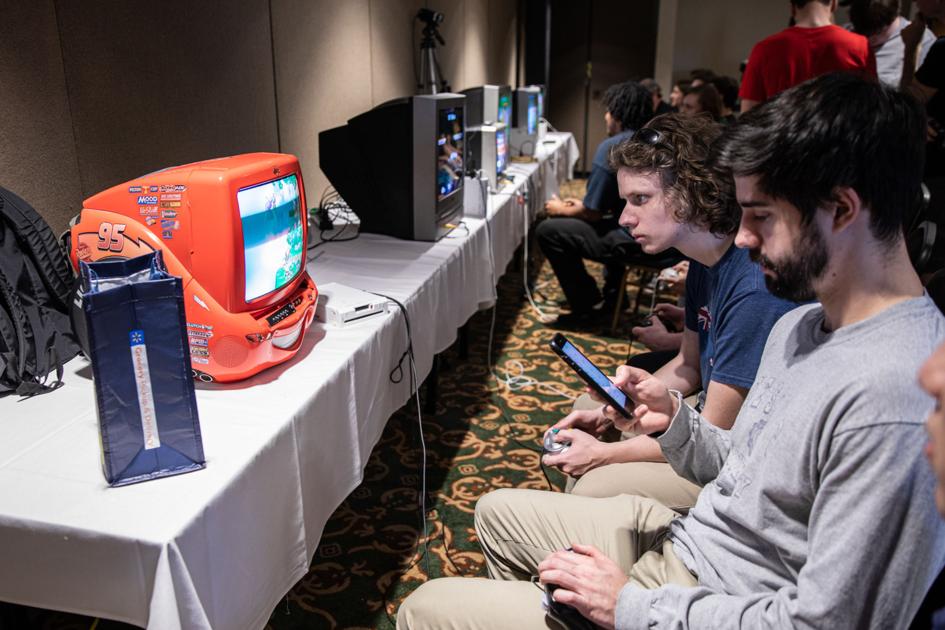
Due to COVID-19 limitations, Georgia’s Department of Recreational Sports put a plan into action earlier than they had originally hoped. It was time to include esports among its intramural offerings.
In past summers, the department offered traditional sports leagues, such as soccer, volleyball or flag football. Yet when the spread of COVID-19 forced it to cancel all leagues and tournaments scheduled for the spring and summer, the department pushed up its program of esports by about six months.
“With the pandemic, we wanted to put programs in place that gave our UGA community [the chance] to still connect while we were not on campus,” said Michael Husted, assistant director for competitive sports. “So, we implemented our first tournaments in April.”
In the spring, intramural league offerings included competitions across several different video game titles, including “NBA 2K20,” “Madden NFL 20” and “Rocket League.” Since then, the department has broadened its range of selections, adding “NHL 20,” “Super Smash Bros Ultimate” and “League of Legends.”
Increasing variety is a priority for the intramural leagues, whose main goal is to bring students together and create an environment desirable to as many students as possible, according to the department’s website.
“We offered 5 different esports for students this spring with 280 students participating,” Husted said. “We didn’t have a goal for student participation, but we were very pleased with the number of students that played, especially since we added these events last minute and only had a couple weeks to promote them.”
While some competitors from traditional sports signed on to the esports leagues, the department drew in newcomers as well.
Nikolas Propes, a third-year Georgia student from Suwanee, Georgia, had not participated in any of the intramural competitions offered by the university prior to the addition of esports.
In the spring, he joined the “3v3 Rocket League” competition, a virtual soccer-simulator in which rocket-propelled cars try to direct a giant ball into the opposing team’s goal. Propes plans to compete again during the summer.
“My experience with the IM league was great. There was great sportsmanship in my experience and there was no toxicity between the players,” said Propes. “Overall, I had a great time with my experience. I was on a team of free agents because I did not know anyone, and I have made good friends with the people I got teamed up with.”
Rules for each league were important, since players would be competing from the comfort of their own homes without any supervision from university referees.
In coming up with the competitive rulesets, the department consulted with other schools from around the country and entrusted the enforcement of those rules to the participants.
With nearly 300 individual players participating from home, Husted said monitoring player behavior did become an issue on occasion.
“Unfortunately we have had some questions about people using ineligible players and we get as much information as possible when those questions come up,” Husted said.
After matches, score reporting is also entrusted to the students, but they did their part to maintain competitive integrity, allowing for smooth processing of the results.
“The score reporting was easy to do because we had to send a screenshot with the final score, and [the department] would put it in,” said Propes.
Due to the overall success of esports in the intramural leagues, the Georgia’s recreational sports department has moved forward with its decision to keep esports available in the intramural leagues during the 2020-21 school year.


